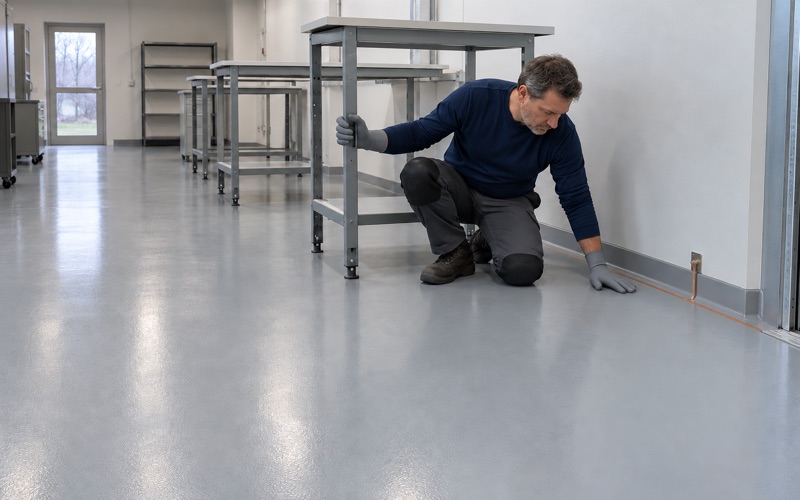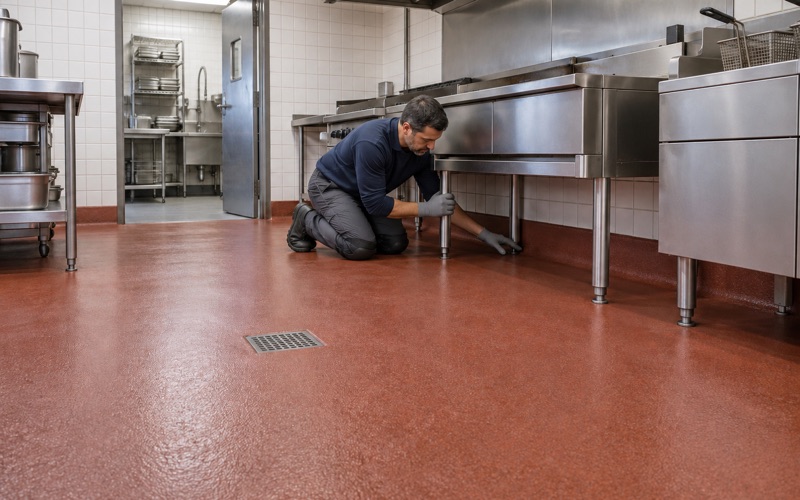
Arlington Heights Epoxy Flooring has spent more than 20 years on epoxy flooring in Summit and across the Chicago area, and a good share of that work sits under buildings where the person paying for the floor is not the only person who walks on it. A shared basement, a laundry corner used by two households, a garage where a tenant parks next to the owner’s car: those floors carry more traffic and more opinions than a single-family slab does.
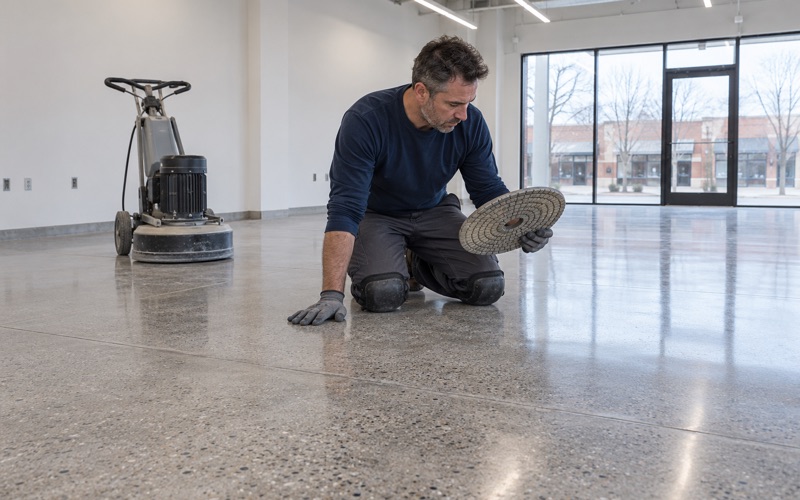
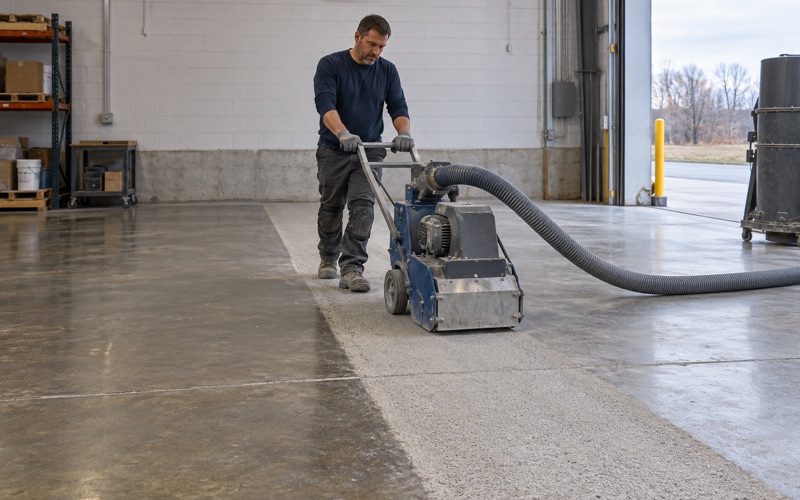
We start the same way on all of them. The concrete is opened with a diamond grinder or a shot blaster, never with acid, and the slab is tested for moisture as a written line item before any coating is chosen. The proposal you sign names the product, the system build and the finished thickness, so you can hold the finished floor up against the paperwork.
That paperwork matters more when you are also a landlord. You may need to show a tenant what is happening and when, or justify the spend at tax time, and a vague quote helps with neither.
One basement, two or three households
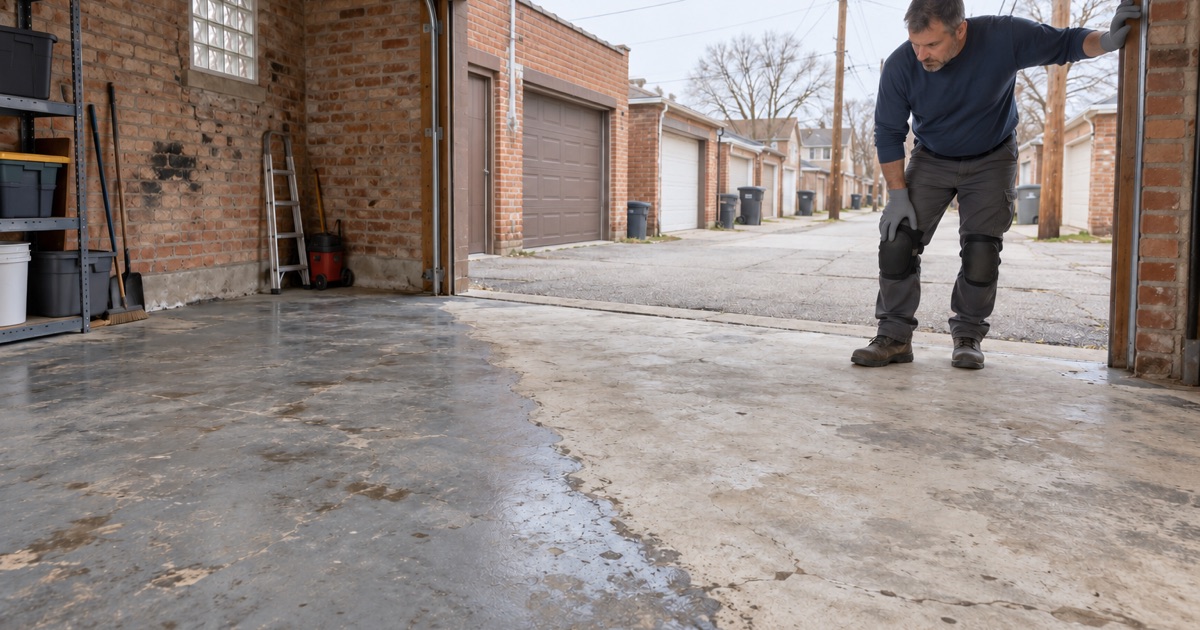
The building type that defines a lot of our Summit work is the two-flat or the three- and four-unit building. Census figures put 1,259 of the village’s 4,063 housing units, or 31.0 percent, in two-to-four-unit buildings, split almost evenly between 636 units in two-unit buildings and 623 in three- and four-unit buildings. That is close to a third of the housing, and in these buildings the basement is usually common space.
A shared basement floor is a different job from a private one. It takes washer traffic, storage bins from more than one unit, bikes, and the occasional plumbing leak that nobody upstairs noticed for a week. The coating has to be chosen for that mix rather than for a showroom finish.
Picking a system for shared traffic
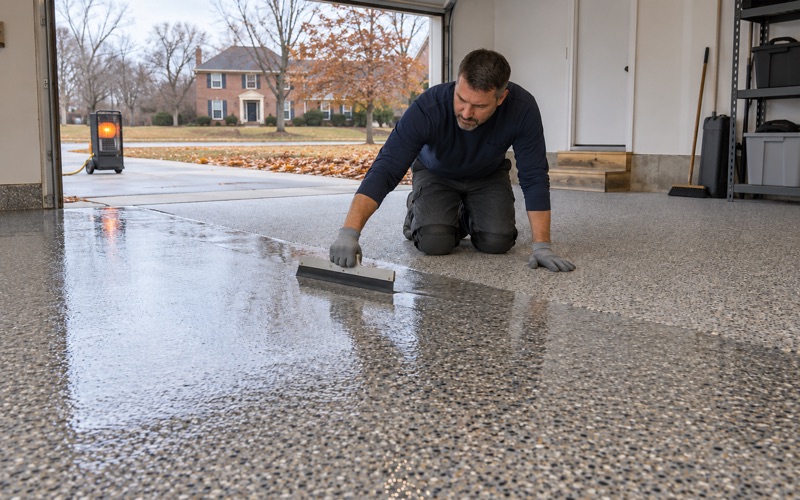
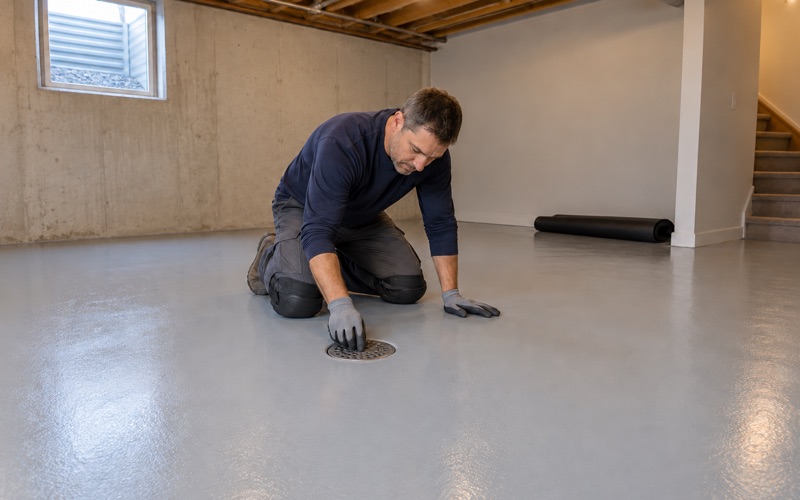
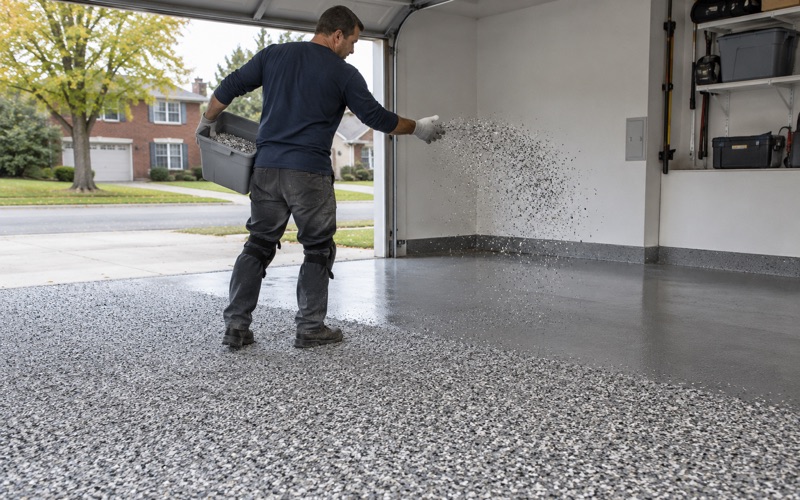
For most shared basements we lean toward a 100% solids epoxy base with a vinyl flake broadcast and a polyaspartic topcoat. The flake hides the scuffs that pile up when several households move things across the same floor, and the topcoat cleans easily with a mop. Where the basement holds a laundry area, we pay close attention to the floor drain and how the coating terminates around it, so water runs where it should instead of sitting at the edge. Near a laundry that stays damp, a quartz aggregate broadcast gives a firmer, more slip-resistant texture underfoot.
Reading the slab before the quote
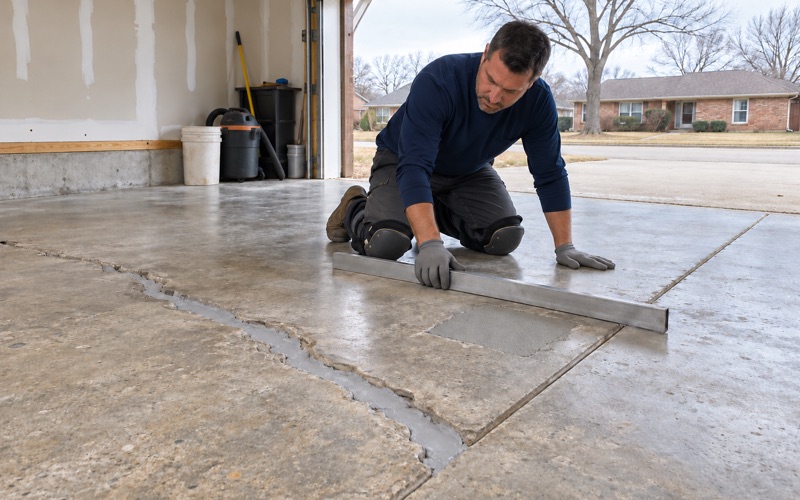
Shared basements often carry patch jobs from several owners over several decades. We look at the cracks and the old coating or paint before we price anything, and we tell you plainly when a section needs repair first. A coating is a film that follows the concrete under it, so it will not hold a moving crack together, and we say that before the job is sold rather than after.
Looking for epoxy-flooring closer to Pingree Grove? See Epoxy-Flooring Services in Pingree Grove.
When the owner lives upstairs and the tenant parks in the garage
Of the units in Summit’s small multifamily buildings, 321 are owner-occupied. Those owners are making a decision that a single-family homeowner never faces: the garage floor they are paying for may be used mostly by a tenant, and the basement they are coating may hold more of a renter’s belongings than their own.
Deciding what the floor is for
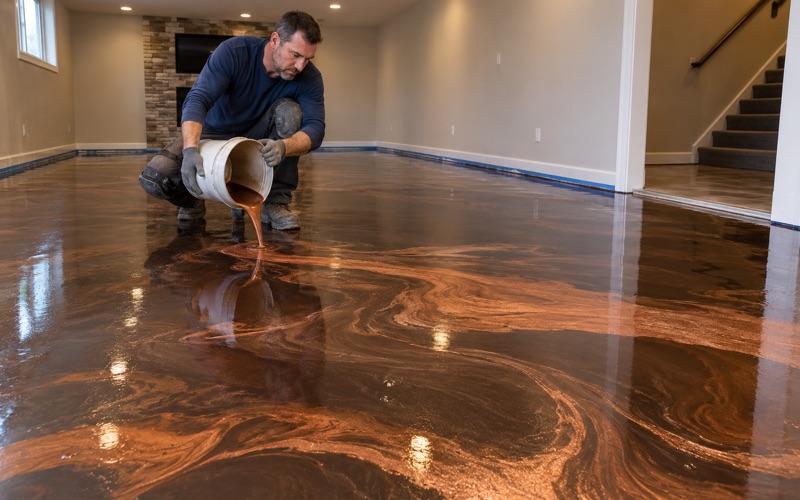
Some owners want the garage done because the slab is dusting and a tenant has complained. Others want the basement finished because it raises what the unit is worth to the next renter. We ask which problem you are solving, because a durable flake system for a rental garage and a decorative finish for an owner’s workshop are different scopes at different prices.
Hot tire pickup and shared parking
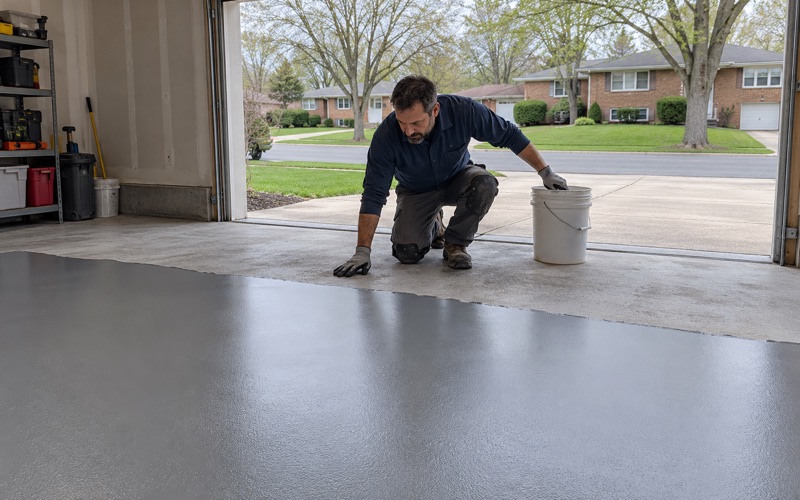
In a garage shared between an owner and a tenant, two sets of tires sit on the floor every night. Cheap single-coat kits are prone to hot tire pickup, where warm tires lift the coating off in patches. We build garage floors on a ground profile with a full-solids base and a polyaspartic or polyurea topcoat, which is the combination that holds up to that kind of daily parking.
What we put in writing
On a home job, Illinois law requires a written contract and the state’s Home Repair: Know Your Consumer Rights pamphlet before work begins, under the Illinois Home Repair and Remodeling Act. We provide both on every residential job, and we read the warranty exclusions out loud before you sign, with moisture named first. If you need to share the scope with a tenant, the proposal is written plainly enough to hand over.
Scheduling a coating around a lease
Renters occupy 39.1 percent of Summit’s occupied units, so a basement or garage coating here is often scheduled around a tenant rather than around the owner’s own weekend. That changes how we plan the days on site.
Turnover windows
The cleanest time to coat a shared basement or a tenant garage is between leases, when storage can be cleared and nobody needs the laundry for a few days. If you know a unit is turning over, call us early so the grinding, the moisture test and the coating can fit inside the gap. A vacant stretch of even a week is usually enough for a residential system to go down and cure to light use.
Turnover is also when we can see the whole slab. With storage cleared we can map the cracks and the old patch work and price the repair accurately, instead of discovering it halfway through the job.
Working with tenants in place
When a turnover is not coming, we can split a basement into sections or schedule the garage so each household loses access for as short a time as possible. We tell you in advance how long the floor needs before foot traffic, before storage goes back, and before a car can park on it, so you can pass accurate dates to your tenants. Floor coatings we use stay within the Illinois limit on VOC content, which binds the installer as well as the manufacturer, and that is worth knowing when people live above the work.
Moisture testing first
We test basement slabs before we commit to a coating, using ASTM F2170 in-situ relative humidity probes or ASTM F1869 calcium chloride testing depending on the slab. If the readings are high, we specify a moisture-mitigation primer rather than gamble on a standard base coat. It costs less to plan for moisture on day one than to pay for a blistered floor in a unit you are trying to rent.
Older slabs, Argo and where Summit ends
Summit’s housing is mostly mid-century or older. About 52.8 percent of units predate 1960, with 939 built in the 1950s and 873 in the 1960s, and building slowed sharply after the 1970s, with only 46 units added in the 1980s. That means our work here is almost always on existing concrete, not fresh pours.
What decades of use leave on a slab
Older basement floors in small buildings tend to carry paint, sealers, adhesive from old tile, and oil stains from years of parking. Grinding removes those and opens the surface to a profile in the ICRI CSP range the coating calls for. We do not sell any floor coating as radon reduction; in Illinois that work takes a state radon mitigation license, and we say so if a basement owner asks.
Efflorescence, the white mineral crust left where water moves through concrete, shows up often on older basement floors. We note it during the walkthrough because it tells us moisture is passing through the slab. A quick ASTM D4263 plastic sheet test can flag a problem area, but the instrumented tests make the actual decision.
Argo and the Archer Road line
The village name, in use since 1836, refers to the highest point on the Chicago Portage between the Chicago and Des Plaines rivers, just north of town. The Illinois and Michigan Canal was built between 1836 and 1848 and the Chicago Sanitary Canal between 1892 and 1900, and limestone quarries north of the canal provided jobs from 1865 into the 1920s.
Summit annexed the Argo subdivision, and the Argo name still turns up on addresses near Archer Road. The large Argo corn-processing plant across Archer Road sits in Bedford Park, not Summit, and the village boundary runs along the road itself. On a commercial or industrial job quoted off a Summit Argo address, we confirm which municipality the building is actually in before assuming whose permit desk applies.
Who signs off
For a property inside the village, the Village of Summit Building and Public Works department works out of the Strzelczyk Municipal Center at 7321 W 59th Street, and Summit is in Lyons Township in Cook County. Illinois issues no state license for flooring or coatings work, so instead of a license number we show the contractor registration, bond and insurance the village asks for. If you own a two-flat in Summit and want a floor that works for the household upstairs and the tenant downstairs, we will come look at the slab and put the whole plan in writing.
- 20+ Years Coating Concrete
- Moisture Tested Before Quoting
- Itemized Written Proposals