Arlington Heights Epoxy Flooring brings more than 20 years of practice to epoxy flooring in Franklin Park, and the first question we ask on a job here is what gets made on the slab. A floor under a machining cell, an assembly line or a candy kettle fails for different reasons, and the system we specify follows the product rather than a catalog page.
That means the walk-through looks at spills before it looks at colors. We note where coolant mist settles, where oil weeps from a press, where syrup or rinse water runs toward a drain, and where carts and pallet jacks cross the wettest spots. Those observations become the product, the system build and the finished thickness named in our written proposal, so a plant manager can check what was quoted against what went down.
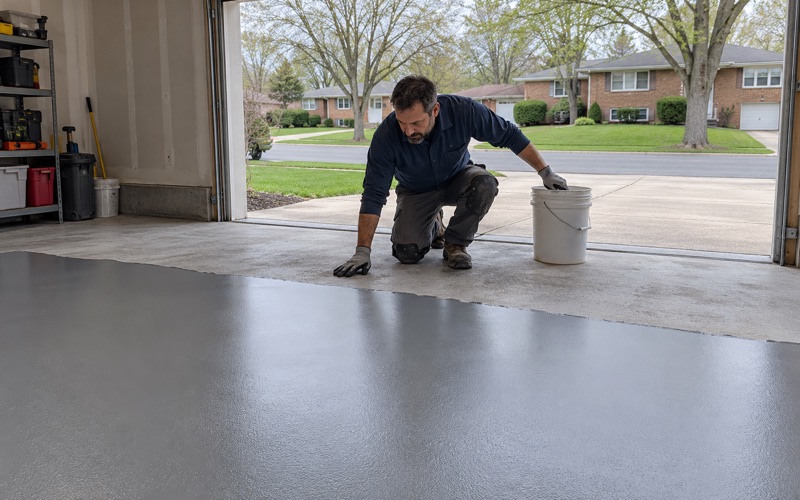
Houses get the same discipline at a smaller scale. A garage slab poured decades ago still gets a moisture test written into the scope and a careful read of its cracks and old coating before we put a price on it.
Valves, Fixtures, Treadmills and Candy on the Production Floor
Franklin Park is a village that makes things, and its floors carry the evidence. In 2024 the village counted 1,237 commercial and industrial water and sewer customers against 4,664 residential ones, so roughly one account in five belongs to a business. That ratio shapes our work here more than any other number.
What the village’s employer table shows
The major-employer table the village carries in its FY2025 audit report is dated 2021, and the year matters when quoting it. That table lists The Hill Group at 837 employees, Sloan Valve Company at 760, Ferrara USA at 750, Koch Foods at 500 and Life Fitness at 450. Sloan Valve, the company famous for the flushometer, runs its plant at 10500 Seymour Avenue inside village limits, while Ferrara makes candy and Life Fitness builds fitness equipment. Transcendia and Moss Inc, which work in plastic film and fabric graphics, round out the list at 250 each.
None of those companies is our customer, and we name them only because they describe the kind of floor this village is full of. Valve bodies, restroom fixtures, treadmill frames and confections all leave something different behind on concrete. A coating that suits one of those floors can be exactly wrong for the next building down the street.
Machine oil and cutting coolant
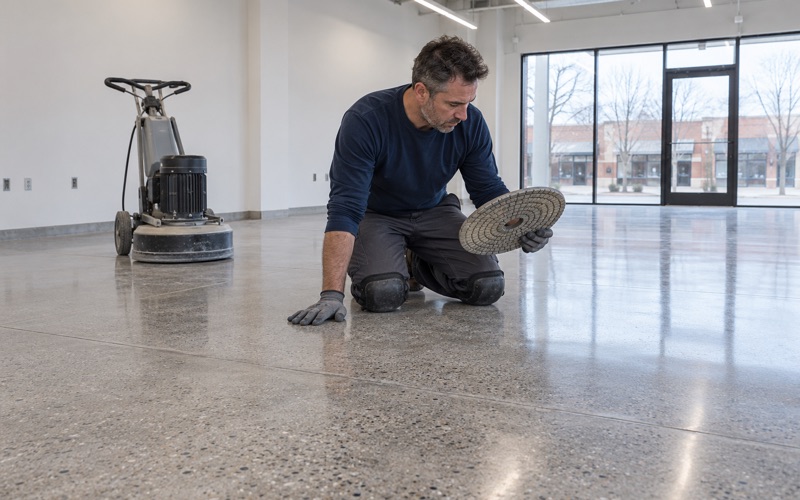
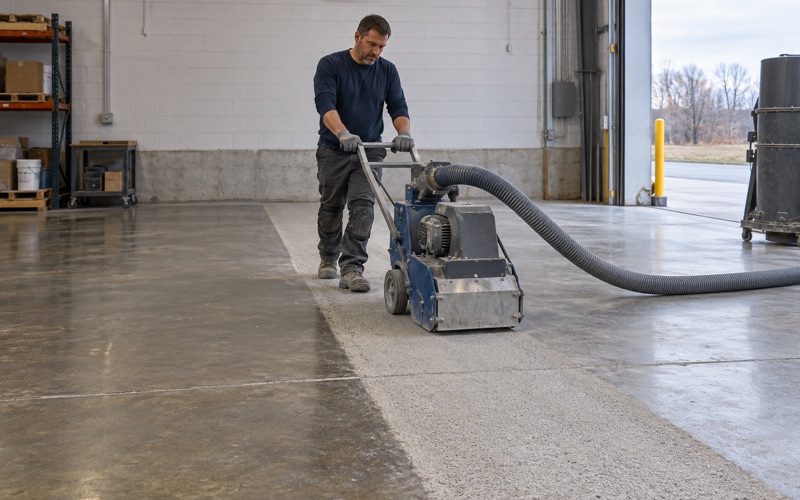
On a machining or assembly floor the enemy is usually oil, not traffic. Cutting coolant and hydraulic fluid soak into bare concrete for years, and a resin rolled over a contaminated slab lets go in sheets. We grind or shot blast the slab open to a measured ICRI CSP profile, and when oil has wicked deep we say plainly that the affected area needs cleaning or cutting out before any coating can bond.
For the coating itself, a 100% solids epoxy body coat with a chemical-resistant topcoat is a common build where oils and coolants are the daily exposure. We match the topcoat to the fluids the plant actually uses, and we ask for the safety data sheets rather than guessing. A floor that resists one coolant can soften under another.
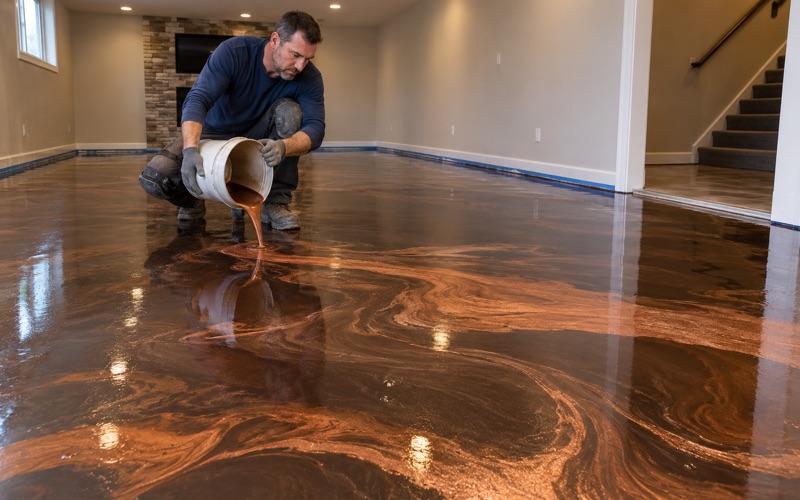
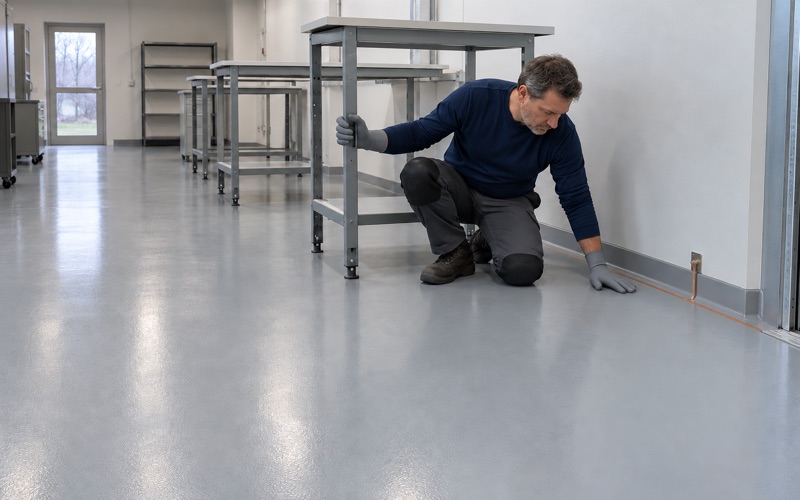
Assembly floors, like the ones where treadmill frames or valve bodies come together, usually want more than chemical resistance. Plants often ask for colored work cells, striped walkways and a lighter finish that brightens the line, and all of that can be built into the same system. We lay out those zones with the plant’s own safety staff before the first coat goes down, because moving a stripe after cure means grinding it off.
Sugar and heat on a confectionery line
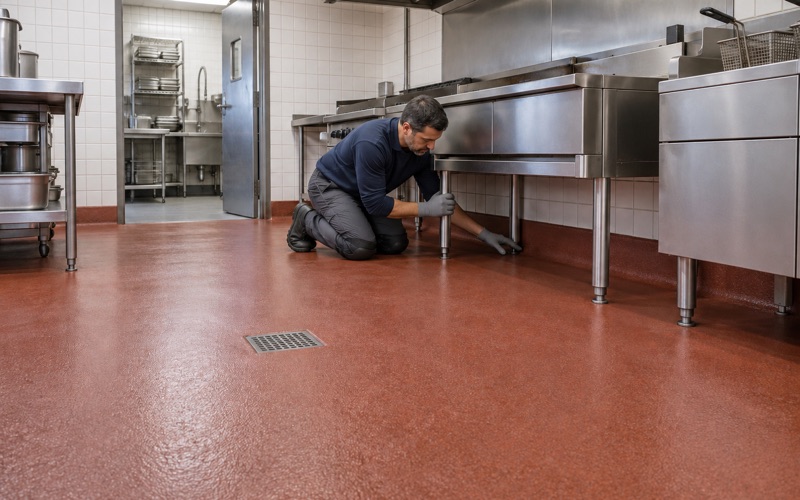
Candy production brings a different set of problems: sugar that hardens into a grinding paste, hot water used to clean it, and frequent washing. Sugar is an organic acid source once it ferments in floor joints, and it will attack plain concrete and thin coatings over time. A thicker, seamless system with sealed joints and enough texture to keep footing on a wet floor is usually the answer we price.
Not every room in a confectionery building needs the heaviest build, though. Dry packaging rooms, warehouses for finished cartons and maintenance shops see far less water and sugar than the cooking floor. We price those areas separately, often with a thinner epoxy or a polyaspartic system, so the owner pays for heavy protection only where the production process actually demands it.
Looking for epoxy-flooring closer to Norridge? See Epoxy-Flooring Services in Norridge.
Washdown Floors at a USDA-Inspected Poultry Plant
Koch Foods’ Franklin Park plant appears in the USDA Food Safety and Inspection Service directory as JCG Industries at 2153 and 2155 Rose Street. A poultry processing floor works under federal inspection, and that changes what an owner should expect from a flooring contractor’s sales pitch.
What inspection does and does not mean for the floor
There is no such thing as a USDA approved floor coating. FSIS inspection is performance based: the floor has to be cleanable, durable and free of cracks and pockets where product and water collect, and the inspector judges the result rather than a label on a resin pail. When a contractor tells you their product carries a USDA approval, that claim is the first thing to question.
What we offer instead is a description of how the system will behave under the plant’s own sanitation routine. We ask about water temperature, chemical concentrations, cleaning frequency and how long the floor stays wet each shift. Those answers decide whether the build is an epoxy, a urethane cement or a combination.
Building a floor that survives the washdown
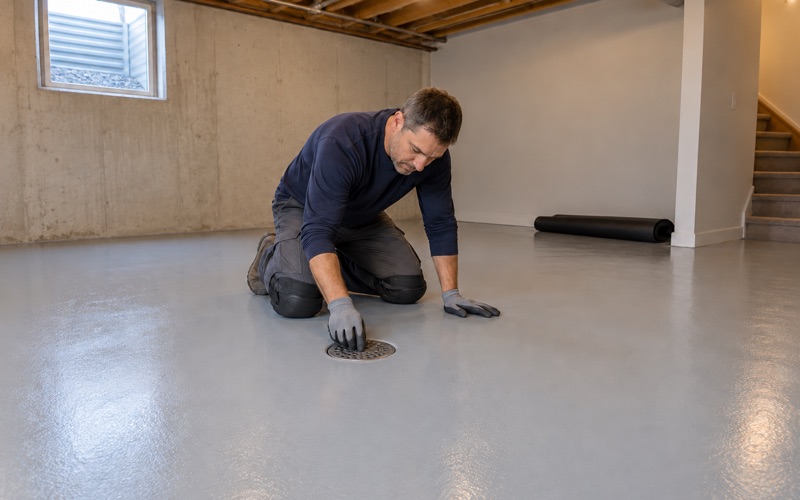
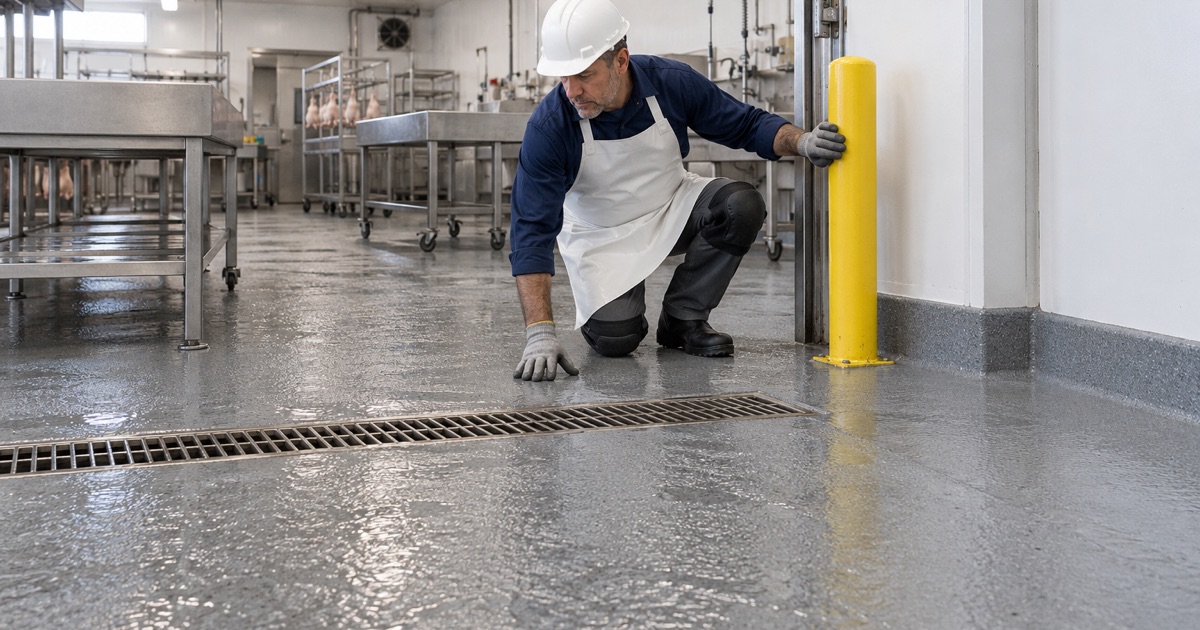
Urethane cement is the industry’s usual choice where hot washdown and thermal shock are daily facts, because it tolerates temperature swings that crack a thin epoxy film. We pair it with an integral cove at the wall, careful detailing around every floor drain and trench, and a quartz aggregate broadcast sized for the footing a wet production floor demands. The slope to drain is the concrete’s job, though, and a coating follows whatever slab is under it.
Moisture testing comes first even here. We run ASTM F2170 in-situ relative humidity probes so the readings come from inside the slab, and the results are in the proposal before the floor is scheduled. Warranty exclusions get read aloud before the contract is signed, with moisture named first.
Working around production
A food plant cannot simply stop for a week. We phase commercial jobs around the hours a building has to keep running, and the cure schedule follows slab temperature and dew point rather than a calendar date. That planning is part of the quote, not something sorted out after the crew arrives.
Licensed, Bonded and Insured Before a Permit Is Pulled
Illinois issues no state license for flooring or coatings work. In Franklin Park the license that matters is the village’s own, administered by the Village of Franklin Park Building Department at 9500 Belmont Avenue, and the village states that all contractors performing work within its limits must be licensed, insured and bonded.
What the village requires
A contractor license costs $100 a year, or $250 for a general contractor, and the license year runs May 1 to April 30 with no half-year licenses. On top of that, each contractor posts a $10,000 license and permit bond specific to the trade and carries at least $1,000,000 in liability insurance. A coatings contractor without all three cannot pull a permit here.
What we show instead of a license number
Because there is no state flooring license to quote, we hand over the village registration, the bond and the insurance certificate a municipality asks for. If a contractor calls itself state licensed for epoxy work in Illinois, ask what the license number refers to. Our answer is the village paperwork, current for the license year the job falls in.
Timing matters with a May 1 renewal. A plant project quoted in March and installed in June spans two license years, so we confirm the renewal is on file before the crew mobilizes. Owners and facility managers are welcome to ask for copies of every document at the walk-through rather than waiting for the permit counter to ask.
The village’s O’Hare East Industrial TIF and its Downtown Franklin Avenue TIF both appear in the FY2025 audit report, and owners improving buildings in those districts sometimes ask about them. We leave district questions to the village and keep our part to the license, bond, insurance and permit.
4,304 Owner-Occupied Houses, Most From Before 1960
Away from the plants, Franklin Park is a village of detached homes owned by the people who live in them. Of 4,511 owner-occupied units, 4,304 are single-family detached houses, and 75.1 percent of all occupied units are owner occupied.
Slabs from the 1940s, 1950s and 1960s
The housing count tells the age story: 2,272 of the village’s 6,201 units were built in the 1950s, 1,307 in the 1960s and 1,056 in the 1940s. About 62 percent predate 1960, and 90.7 percent were built before 1980. A garage slab that old may have been poured without a vapor retarder beneath it, so the ASTM F1869 calcium chloride test or an ASTM D4263 plastic sheet test is a line item in our scope from the start.
Old coatings and cracked slabs
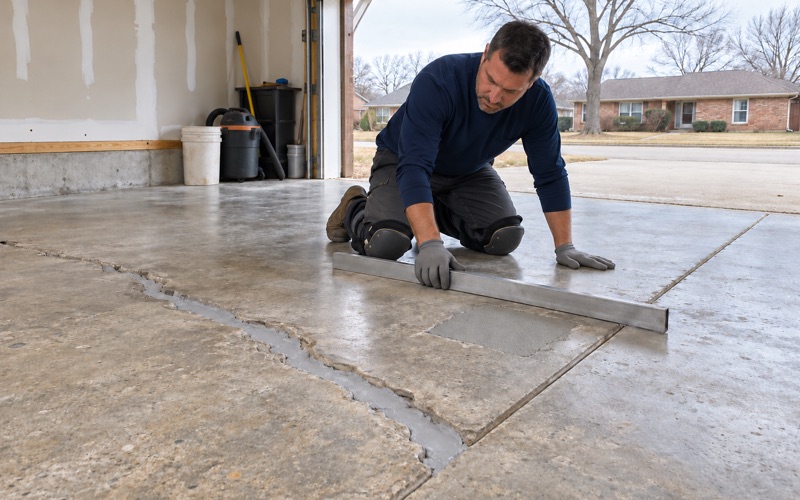
Seventy years of owners often means seventy years of patches, paint and store-bought kits. We grind every bit of that off rather than acid etching over it, because a new floor bonds only as well as the layer under it. When a crack is still moving or a section has settled, we say so and price the repair separately, and we explain that a coating will follow that movement rather than stop it.
We also work out what the old layer actually is before quoting. A latex paint, a solvent sealer and an earlier epoxy each come off differently, and some leave residue in the pores that takes a second grinding pass. Knowing that up front keeps the price from changing halfway through the job.
Salt, cure timing and the paperwork
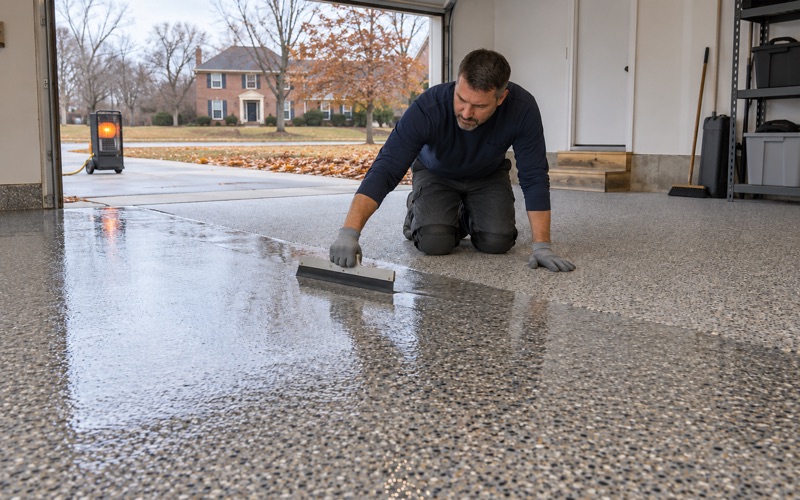
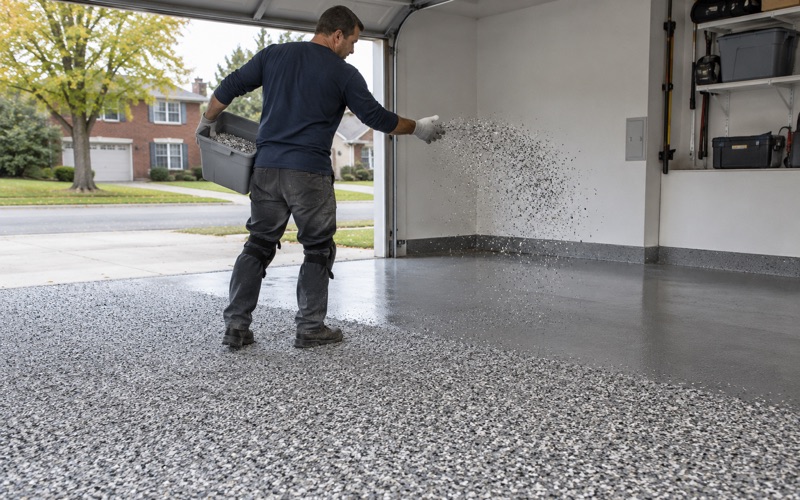
Tires track calcium chloride brine and rock salt onto these garage floors, so we favor a vinyl flake broadcast under a polyaspartic topcoat that stands up to brine and hot tire pickup. In an unheated garage the cure waits on slab temperature and dew point, and sometimes that means telling an owner the job belongs in spring. Every home job starts with a written contract and the Home Repair: Know Your Consumer Rights pamphlet the Illinois Home Repair and Remodeling Act requires.
- 20+ Years Coating Concrete
- Moisture Tested Before Quoting
- Itemized Written Proposals