Arlington Heights Epoxy Flooring brings more than 20 years of epoxy flooring work to Bensenville, and most of the square footage we are asked about here sits under forklifts rather than family cars. A cross-dock floor takes a beating a showroom never sees: steel and poly wheels turning in the same aisle all shift, dock plates slamming down at every door, pallets dragged across the slab where trailers unload. The coating has to survive that traffic pattern, not a brochure photo.
So the first conversation on a warehouse job is about how the building actually moves freight. Where do the lift trucks turn, which doors run hardest, and where will the racking anchors go next year? Those answers decide the system build and its finished thickness, and both go into the written proposal by name.
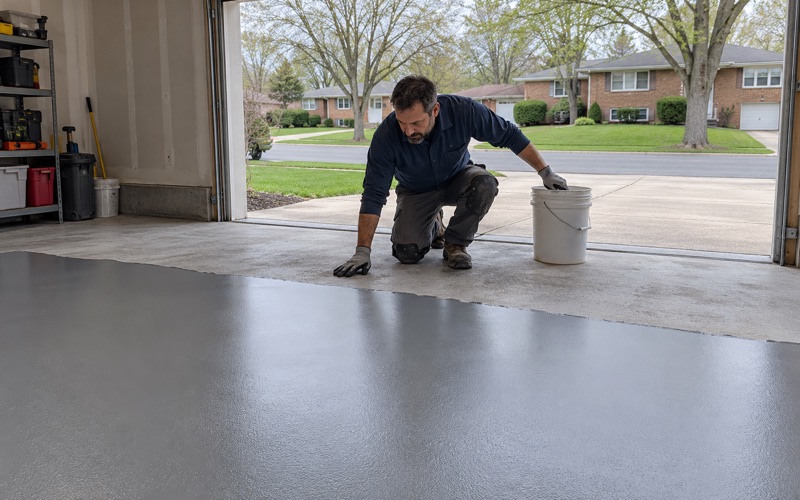
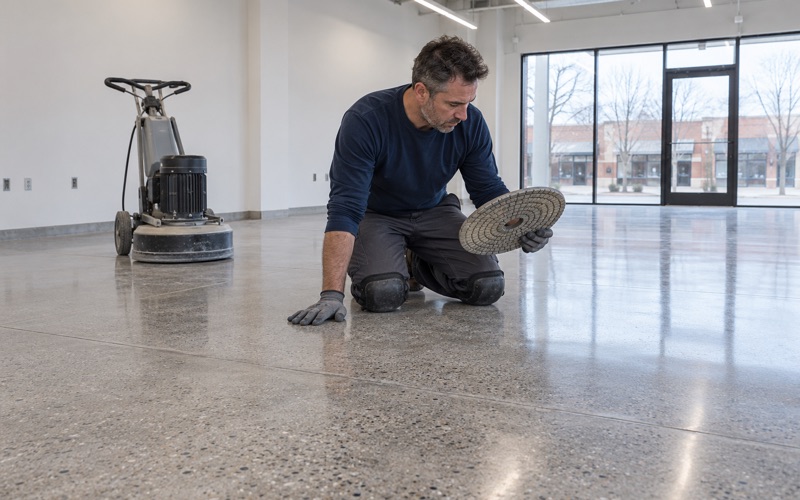
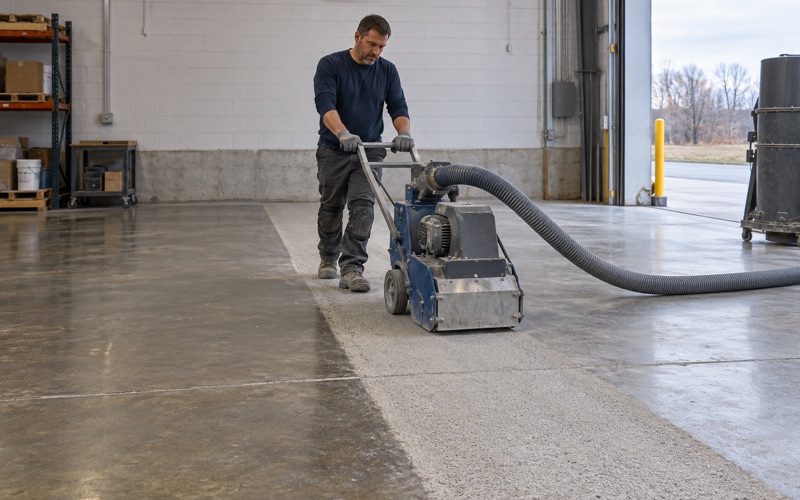
Before any resin goes down, the slab is opened with a diamond grinder or shot blaster. We do not acid etch a dock floor or a garage floor, because an etched surface gives a coating very little to hold on to under wheel load.
Three Freight Forwarders and a Trucker: What the Floor Takes
The village’s 2024 annual comprehensive financial report names its principal employers, and the list reads like a logistics directory. US Foods and R & M Trucking each employ 400 people, Fortune Fish and Gourmet 350, Expeditors International 300, and Kuehne & Nagel and UPS Supply Chain Solutions 200 apiece. That is three international freight forwarders and a long-haul trucker on one page, in a village that borders the southwest corner of O’Hare International Airport.
We are not claiming any of those companies as clients. The list matters because it tells us which floor dominates Bensenville’s commercial stock, and it is not a production floor. A forwarder such as Expeditors or Kuehne & Nagel runs buildings where freight arrives at one door and leaves by another, so the wear lands in lanes you can map before anyone starts grinding.
Forklift Aisles and Turning Points
Straight runs wear fairly evenly. The real damage concentrates where lift trucks pivot at aisle ends and stop to pick, because a loaded wheel turning in place scours the surface. We build those zones heavier, with a 100% solids epoxy body coat and a quartz aggregate broadcast that adds thickness and keeps a scuffed aisle from turning slick.
Travel lanes and pedestrian walkways are striped as part of the system and sealed under the topcoat. A stripe painted on top of a finished floor tends to wear away in the first busy season.
Racking Lines
Racking anchors drill straight through whatever coating is down, and a layout that changes leaves a field of old holes. We ask about the racking plan before choosing a system, coat under the rack footprint once the layout is settled, and put the patching method for future anchor moves in writing. A forwarder that reconfigures for a new account should not have to recoat the building to do it.
What the Proposal Names
Every proposal names the product, the system build and the finished thickness for each zone, with aisles, dock strips and staging areas listed separately. A facility manager can then check what went down against what was quoted, area by area, instead of trusting a single line that just says epoxy floor.
Looking for epoxy-flooring closer to Schiller Park? See Epoxy-Flooring in Schiller Park.
Dock Doors, Dock Plates and the Slab Just Inside
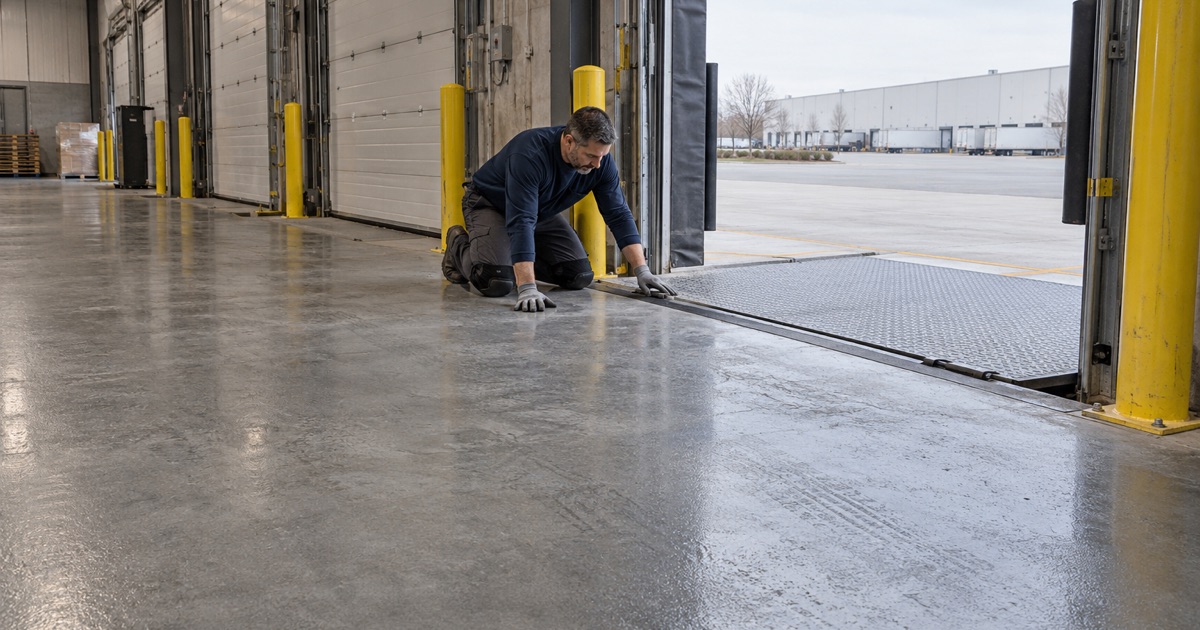
The strip just inside each dock door is the hardest-working concrete in a cross-dock. Dock plates drop onto the slab edge, pallet jacks bang across the joint, and rain blows in every time a door rolls up. By the time anyone calls about a coating, that edge is often spalled, cracked or patched more than once.
Reading the Damage First
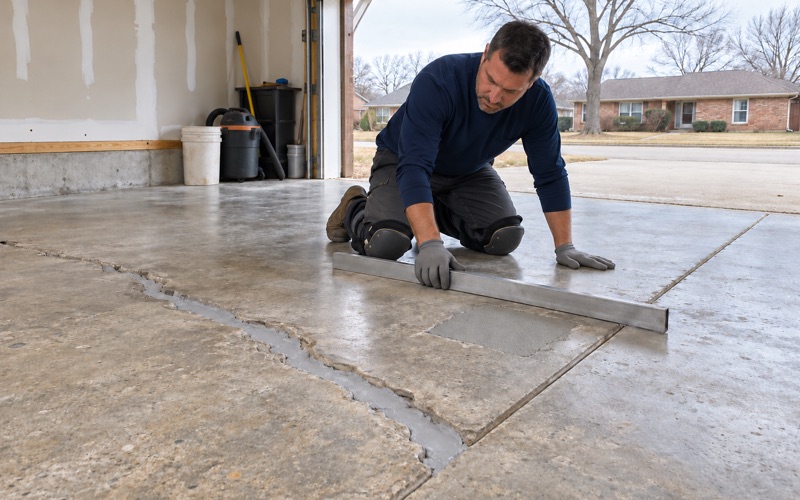
We look at the cracks, the patches and any old coating before we quote, and we say plainly when a dock edge needs repair before it can be coated. A coating is a film that follows the concrete under it. Put it over a broken edge and you get a broken edge with a fresh finish for a few months, then the same failure plus a peeling coat.
Where the slab is sound, the first ten feet inside the door usually get the heaviest build on the floor. Urethane cement is often the right choice there, because it tolerates impact, water and temperature swings better than a thin epoxy, and the system can step down to a lighter build where traffic spreads out into the building.
Profile and Moisture at the Doors
A dock floor that has been sealed, waxed or soaked with hydraulic fluid will not take a coating until it is opened up again. Diamond grinding or shot blasting brings the surface to the ICRI CSP profile the system calls for, and shot blasting is often the faster tool across a wide, open dock.
Moisture testing is a written line item on every job, not something brought up after a floor blisters. On warehouse slabs we use ASTM F2170 in-situ relative humidity probes, and a high reading means a moisture-mitigation primer goes into the build rather than a gamble on the topcoat. Warranty exclusions are read out before the job is sold, with moisture first among them.
Working Around the Freight Schedule
Cross-docks rarely close, so we schedule commercial work around the hours a building has to keep moving freight, usually by phasing door groups so some stay live while others cure. A polyaspartic topcoat can return a dock strip to light traffic quickly, though full forklift loading waits for the cure the product data requires. Cure timing follows slab temperature and the dew point spread at the slab surface, which matters at a door that stands open to outside air all day.
Food Distribution, Two Counties and Who Signs Off
Two of the top three employers on the village list move food. US Foods and Fortune Fish and Gourmet are both food distributors, and Fortune Fish operates at 1068 Thorndale Ave, an address that geocodes inside the village in Addison Township, DuPage County. Part of Bensenville’s warehouse stock is therefore refrigerated distribution, where a floor handles washdown and cold product as well as forklifts.
Floors That Face a Food Inspector
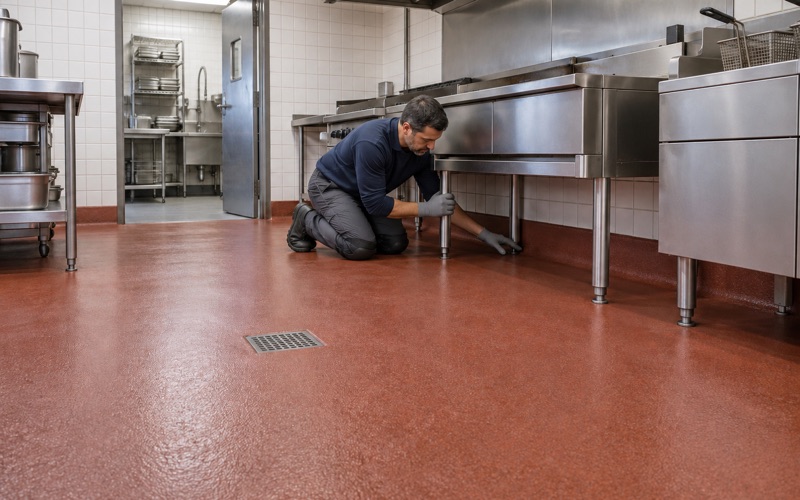
Food-handling areas fall under the Illinois Food Code, which adopts the 2022 FDA Food Code. Section 6-201.13 calls for coved junctures where floors meet walls, so we run the coating up the wall in a sealed cove rather than stopping at a seam where water and debris collect. Washdown areas often get urethane cement, and drains are detailed so water has no edge to get under.
Section 6-201.11 also allows an antislip surface where one is needed for safety, which is where an aggregate broadcast earns its place on a wet loading floor. We match the texture to the cleaning routine, since a surface too coarse to scrub works against the inspection it was meant to pass.
Which Health Department Depends on the Parcel
Bensenville is split between DuPage and Cook counties. On the DuPage side, food floor questions go to the DuPage County Health Department; on the Cook side, to the Cook County Department of Public Health. About 80 percent of the village’s EAV sits in the Addison Township tax code in DuPage, but a percentage does not settle the question for one building, so we check each address before planning around a health review.
Fire District and Village Permits
Fire protection here comes from Bensenville Fire Protection District No. 2, a separate taxing district rather than a village department, and the village itself carries no firefighters on its payroll. On a commercial job we do not assume the village counter speaks for the fire side, and we ask early which reviews the project will need.
Building permits run through Village of Bensenville Community Development. Its application requires electrical and plumbing contractors to hold an Illinois municipal license and post an original $10,000 surety bond to the village. A coating crew is not an electrician, but trench drains, floor box relocations and equipment hookups pull those trades in, and their paperwork needs to be on file before that work starts. Illinois issues no state license for flooring or coatings, so in place of a license number we bring the registration, bond and insurance the village asks for.
Willow Creek, Silver Creek and Addison Creek
The village’s floodplain page names three flooding sources: Willow Creek, Silver Creek, also known as Bensenville Ditch, and Addison Creek with its tributaries, each with its own floodway and floodplain. Residents have repeatedly raised home flooding at board meetings. For a floor contractor, that history changes how we treat any slab that sits low near those channels, warehouse or house.
Slabs That Have Been Wet
A slab that has taken floodwater can carry moisture long after the surface looks dry, and efflorescence, the white mineral bloom on bare concrete, is a common sign. We test before we quote: an ASTM D4263 plastic sheet test as a first look, ASTM F1869 calcium chloride testing for the vapor emission rate, and humidity probes where the slab warrants them, with results read against ASTM F710 thresholds.
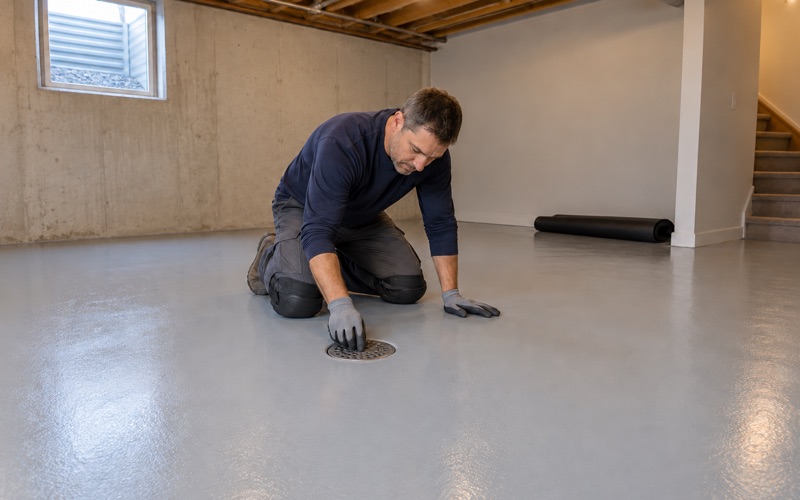
When readings come back high, a moisture-mitigation primer goes under the system, or we say plainly that the floor should wait. Sump pits and floor drains are detailed so the coating seals to them instead of lifting at the rim, which is where a basement floor that has flooded once usually fails first.
Houses and Garages in a Rental-Heavy Village
Bensenville’s housing is close to evenly split, with 3,553 owner-occupied units and 3,462 rented, and 1,168 units sit in buildings of 50 or more. That makes the owner-occupied detached house market, about 3,080 homes, smaller than the population suggests. The stock is also older: 73.8 percent of the 7,283 housing units predate 1980, and the 1970s alone account for 1,794 of them.
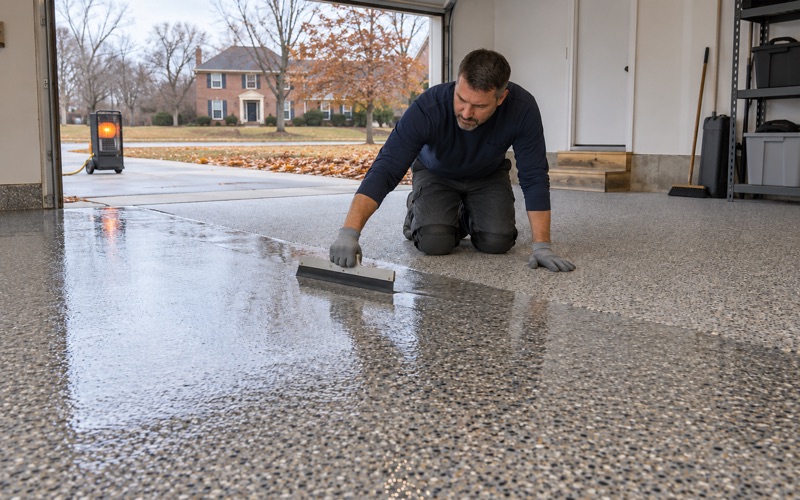
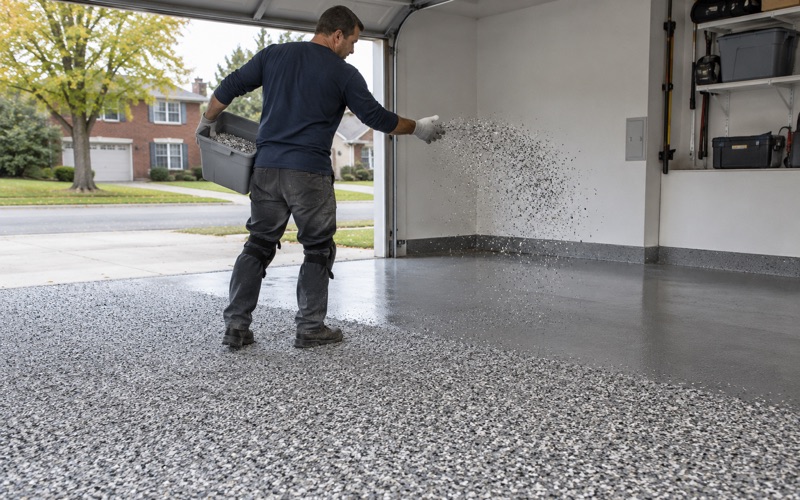
Slabs of that age often bring cracks, settlement and a previous coating to deal with. We read all of it first, profile mechanically to the right ICRI CSP, and usually finish garages in a vinyl flake broadcast that hides old patch lines better than a solid color. Every home job gets a written contract and the Home Repair: Know Your Consumer Rights pamphlet before work starts, as the Illinois Home Repair and Remodeling Act requires.
- 20+ Years Coating Concrete
- Moisture Tested Before Quoting
- Itemized Written Proposals